

Summary
3D printing is enhancing and improving the medical industry with new developments every year. The versatility of 3D printing has resulted in progression in many areas of medicine from ophthalmology to surgery and cardiology.
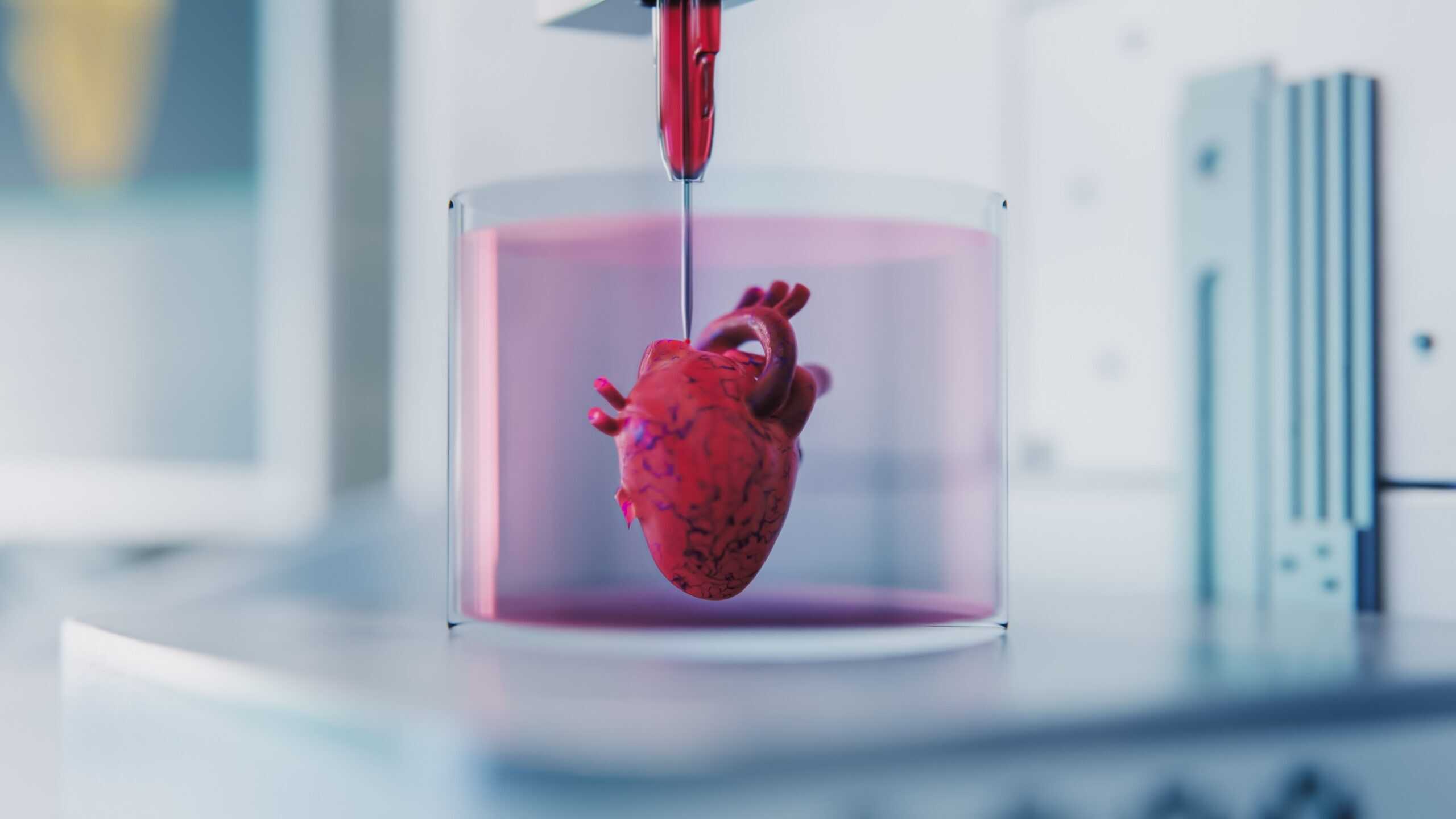
Bioprinting is an extension of traditional 3D printing. Bioprinting can produce living tissue, bone, blood vessels and, potentially whole organs, using human cells as ink (bio-ink).
Skin
Perhaps one of the most fascinating developments in 3D printing is a handheld 3D bioprinter created by researchers in Canada. The machine deposits narrow, even layers of skin tissue to cover and heal deep wounds. It is believed to be the first device that forms tissue in situ, depositing and setting the skin tissue in place within two minutes. This will eventually take away the need for skin donors and the multiple surgeries that burns patients face.
Whilst clinical trials on humans have not yet commenced, this device could revolutionise burn care in the future.
Prosthetic Limbs
3D printable prosthetics allow engineers and physicians to develop prosthetics that are fully customised to the user through a quicker and cheaper process than the traditional prosthesis.
However, consumer 3D printing has led to an even bigger revolution with volunteers using their own 3D printers to make low cost prosthetic upper limb devices for children and adults in need across the world.
Organs
There are currently around 1,400 Australians waiting for an organ transplant. A further 11,000 Australians are on kidney dialysis and would benefit from a kidney transplant. Imagine, if at the press of a button, a machine could produce the organ that you desperately need.
Currently 3D bioprinting is used to create miniature kidneys and livers which are used to research drugs and medications.
The difficulty at this stage with making organs suitable for transplant is the inability to print the complex vasculature involved with these organs including blood vessels, veins, arteries, and capillaries. However, researchers around the world are working to turn organ printing and transplantation into a reality.
Looking specifically at the heart, scientists in Switzerland used a 3D printer to create a silicone heart (pictured on the left) that pumps like a human heart. However, whilst their observations confirmed that the model worked like a human heart, it only lasted for 3,000 beats, approximately thirty to forty five minutes.
More recently, scientists in Israel have printed a fully vascularised heart using fat tissue cells from a donor. Whilst the heart is only the size of a rabbit’s heart and is unable to pump blood, scientists are now looking at rescaling the heart and getting it to beat.
Ears
In 2013, researchers from Cornell University printed an outer ear that resembled and functioned like a real ear. This practice is now global, with a large number of children and adults suffering from ear malformations being fitted with 3D printed ears.
In 2019, researchers at the University of Wollongong went further, creating a bioprinter that uses stem cells to grow human ear cartilage which can be used in reconstructive surgery. Researchers hope to continue developing the bio-ink with the ultimate aim of using a patient’s own stem cells to create a biological implant that matches the patient’s anatomy.
Surgery
Instead of relying solely on investigations such as Magnetic Resonance Imaging (MRI) Scans and Computed Tomography (CT) Scans, 3D printing has resulted in the ability to create models of patients’ anatomy. This allows surgeons to view and understand the patient’s anatomy prior to surgical intervention, in turn allowing surgical teams to plan interventions more accurately, take appropriate implant dimensions and even create the implant itself using 3D printing.
To date, this technology has been used for many complicated heart surgeries and even in a total face transplant at the Cleveland Clinic in 2018 where surgeons used a 3D printed model of the patient’s sister’s jaw and then copied it using bone from the patient’s leg and implanted it into her face.
Conclusion
Above are just some examples of how 3D printing is contributing to medicine. With the developments that have occurred over the last ten years, one can only imagine where the scientists around the world will take us over the next decade. We may even witness the first 3D printed organ transplant.